


Businesses have access to vast amounts of information about their customers and competitors. But without the right tools or expertise, the data can be overwhelming and difficult to interpret.
In the market research industry, this challenge can be even more pronounced. Understanding what customers want, how markets are shifting, and where future opportunities lie requires more than just collecting data—it demands careful analysis.
When done right, data analysis can transform raw numbers into meaningful insights, guiding business decisions and revealing new strategies for growth.
What is Data Analysis?
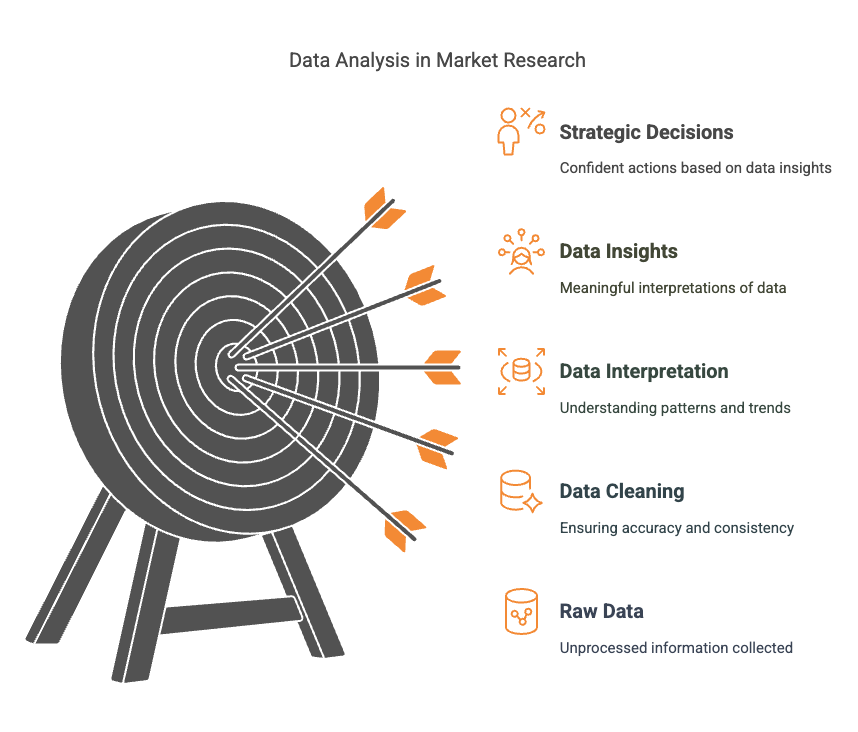
Data analysis is the process of examining raw data to identify patterns, trends, and insights that can help a business make better, data-driven decisions. It involves sorting through large volumes of information, cleaning it to ensure accuracy, and interpreting it in ways that are useful for business strategy.
In market research, data analysis plays a crucial role. It helps businesses understand their audience, spot emerging trends, and gauge the effectiveness of their products or services. Instead of making decisions based on guesswork, data analysis gives businesses a solid foundation of evidence, allowing them to act with confidence.
For example, a small business conducting a survey to understand customer preferences would gain raw results of just numbers and opinions. But with proper data analysis, those results can reveal which products customers prefer, what features they value the most, and where the business might have room for improvement.
Benefits of Data Analysis in Market Research
Uncovering Consumer Insights
Data analysis helps businesses gain a deeper understanding of consumer behaviour and preferences. By examining data from surveys, customer feedback, and purchasing patterns, companies can pinpoint what drives customer decisions. This allows businesses to tailor their offerings to meet specific needs, boosting customer experiences and loyalty.
For example, a retail company analysing customer data from surveys may find that younger customers prefer eco-friendly products. This leads them to introduce a new sustainable product line that attracts this growing demographic.
Forecasting Market Trends
Accurately predicting future market conditions is one of the greatest competitive advantages of data analysis. By looking at past performance and current trends, businesses can anticipate what products or services will be in demand and when. This allows them to prepare ahead of time, staying competitive and relevant.
A small business analysing its sales data might notice a consistent rise in demand for home office equipment. Using this insight, they can ramp up stock and targeted marketing efforts before the trend peaks, capturing more sales in the process.
Improving Business Decisions
One of the most powerful aspects of data analysis is its ability to inform business decisions. Instead of relying on gut feelings or guesswork, businesses can make decisions backed by concrete data. This leads to better outcomes and a higher chance of success.
A business examining data from past marketing campaigns can see which platforms delivered the best return on investment (ROI). Armed with this information, they can focus future marketing efforts on the most effective channels, ensuring better results with fewer resources.
Tools and Tips for Conducting Data Analysis
Data Collection Methods
Before analysis can begin, businesses need data. Market research relies on a variety of data collection methods, including surveys, customer feedback, website analytics, and social media metrics. Each of these sources provides valuable information about consumer preferences, buying habits, and brand engagement.
For example, a business might collect data through online surveys asking customers about their satisfaction with a new product, or they might analyse social media engagement to see how a recent marketing campaign is resonating with their audience.
However, the key to successful data analysis lies not in gathering data, but ensuring it is clean, relevant, and meaningful. Without proper analysis, even the best data collection efforts will result in little actionable insight.
Common Tools
There are many tools available to help businesses turn raw data into useful insights. Basic tools like Excel or Google Analytics can be highly effective for processing and visualising data. More advanced platforms like Power BI or Tableau offer deeper insights, allowing businesses to create custom dashboards, generate reports, and make sense of complex datasets.
The choice of tool often depends on the size and needs of the business. Smaller businesses may find that simpler tools are enough to handle their data, while larger organisations with more complex requirements may benefit from investing in advanced, AI-powered data analysis software.
Data Analysis Challenges (and Possible Solutions)
Data Overload
The sheer volume of data available today can be overwhelming. Businesses may find themselves buried in numbers, unsure of which data points are most relevant to their market research. Without proper filtering and organisation, valuable insights may be lost in the noise.
A small business might collect data from multiple sources—social media, website analytics, and customer feedback. However, without clear objectives or a system for prioritising the most relevant information, they will struggle to draw actionable conclusions from the data.
Skill Gaps
Many smaller businesses lack the in-house expertise needed to effectively analyse data. Understanding how to clean, process, and interpret large datasets requires specific skills that may be beyond the capabilities of their current team. Without this knowledge, businesses risk misinterpreting data or missing key insights altogether.
Solution: Partnering with Experts
One way market research companies can overcome these challenges is by partnering with managed service providers (MSPs). These specialists can help businesses make sense of complex datasets, ensuring they get the insights they need without investing in expensive tools or training.
Get the Right Support for Effective Data Analysis in Market Research
Whether it’s refining product offerings based on customer feedback or using predictive analytics to forecast the next big market shift, data analysis provides the clarity needed to stay ahead.
However, challenges like data overload and a lack of in-house expertise can make it difficult for SMBs to harness the full power of data. That’s where partnering with experts comes in.
Platform 24 specialises in providing the technology and IT expertise market researchers need. We have the IT solutions that will enable you to uncover consumer insights, forecast trends, and make informed decisions that drive success.


